



Improve With Age by Finding Your Community
• 12 min read
- Brief: Life Events
Your decision on how and where to live should preserve identity and self-worth.
Get the Latest Research & Insights
Sign up to receive an email summary of new articles posted to AMG Research & Insights.

Aging well is not just about getting by in your golden years. It’s about enjoying family, friends and the fruits of your life’s labors. It’s also about finding a community that can help you connect and belong, preserve your identity and autonomy, and enrich your purpose and self-worth.
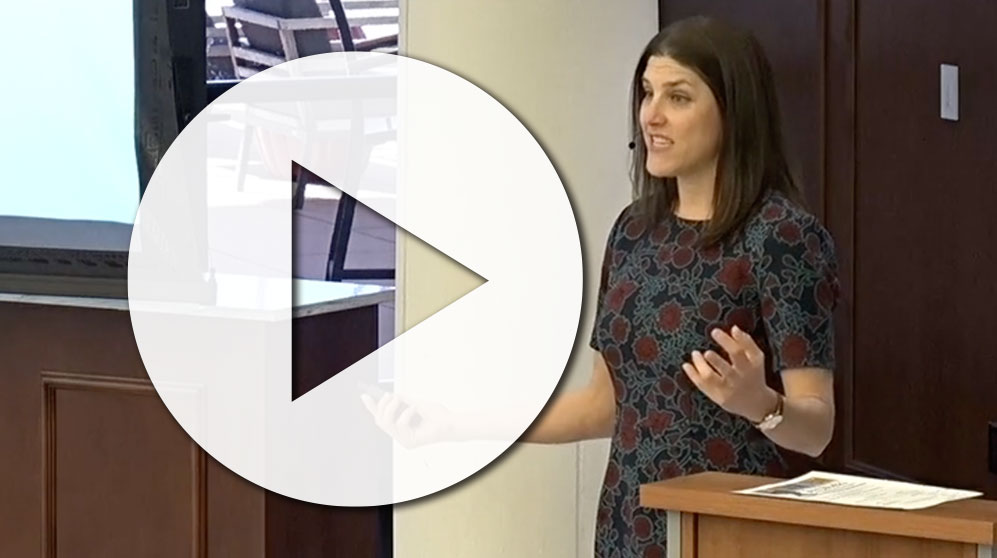
To talk about how to age well with the support of loved ones and your community, and to help dispel stereotypes that tend to disparage growing old, AMG National Trust presented “Not Just Getting By: What Aging Well Really Looks Like.” The Oct. 1 event featured two leaders in this space from Christian Living Communities (CLC): Jayne Keller, Chief Operating Officer, and Pam Sullivan, Vice President of Communications and Philanthropy. CLC is an innovative, not-for-profit senior living organization that provides a continuum of care including assisted living, memory support, and skilled nursing.
Health Risks of Ageism
Living well in the second half of life can involve bucking some stereotypes around aging that tend to strip away self-worth, Ms. Sullivan said. For instance, “We are taught in society that getting older is bad, that young is good, and if we continue with this view of aging, it leads to decline. People start to feel useless as they age.”
Individuals often internalize these negative views. Ms. Sullivan pointed to studies that highlighted the ill effects of doing so. One such study found that widespread prejudice directed at an older person can lead to health conditions totaling $63 billion annually in care costs. Another study showed individuals’ physical function declined due to ageism, potentially shortening their ability to live well by 7.5 years.
Society’s perception of age versus usefulness, however, is incorrect: “We get better with age,” Ms. Sullivan said. “This is a great quote from Albert Einstein, ‘The only source of knowledge is experience.’” Further, she said that Jonathan Rauch’s book, The Happiness Curve: Why Life Gets Better After Midlife, argues that people are happier as they grow older, perhaps because “[y]ou have more knowledge, you have more perspective. Do things bother you as much as they used to? No.”
“You identify patterns and find solutions. … And you see the bigger picture as you age … you’re more resilient. You can tolerate more as you age.”
Place Matters to Your Well-Being
Key to well-being, Ms. Sullivan said, is continuing to find meaning and purpose, continuing to grow and learn, and having the ability to build new relationships when longtime friends pass away.
This includes determining whether the place where you raised your family is still the best place for you, perhaps because the neighborhood is trending younger while you are growing older. Aging is a “team sport,” and it can help to be in a place where people have similar lifestyles and interests. If you have little in common with neighbors, you may become isolated. On the other hand, you may still have a vibrant lifestyle and social circle, in which case it would make sense to remain in place because that support network is all around you.
Recognize When Support May Be Needed
Ms. Keller offered some tips around support and determining when help may be needed:
- If you wait until you’re ready, it’s too late. There may be a waiting list for a community where you want to move, so plan ahead by putting down a deposit.
- Good decisions are never made in a crisis. A health emergency, such as falling and breaking a hip, may cause you to rush and make a choice you could later regret.
- Help loved ones retain as much independence as possible. Regardless of mobility, cognitive or other health issues, loved ones still benefit from participating in and making their own decisions.
- Physical changes. Is there difficulty with balance or incidents of frequent falls? Weight loss or gain? Trouble managing medications? Decline in personal hygiene?
- Cognitive or emotional signs. Forgetting appointments? Confusion over familiar tasks, such as cooking, laundry or balancing a checkbook? Is there increased anxiety/depression, or a withdrawal from hobbies or groups that were previously enjoyed? Recognize that what appears to be a cognitive issue could simply be a sensory issue such as hearing or vision loss that can be easily treated.
- Daily living challenges. Difficulty preparing meals, keeping up with housework, or managing finances? Are there stacks of unopened bills or other mail sitting on the table that has become too overwhelming to understand?
- Social and behavioral changes. Experiencing noticeable mood swings or irritability? Isolating from others?
- Safety concerns. Getting lost in familiar places, such as when driving to church or a store. Noticing more dings on the side of the car? Are they leaving the stove on? Forgetting to lock doors or now locking doors that normally would be left open.
- “If you won’t do it for yourself, do it for your kids.” An older loved one may come to realize they want to help ease others’ concerns and bring them peace of mind.
How to Start the Conversation
These conversations with an older loved one can easily become heated, so choosing the right time and place can be crucial. Having the other person raise the issue first can be a blessing, but such a circumstance may be unlikely.
Lead with Care and Respect
Express your desire for their well-being and use “I” statements rather than “You”. Rather than “You didn’t do this,” phrase it as “I’ve noticed that you seem tired lately and I worry it may be hard to manage everything at home. Can we have a discussion about that?”
Focus on Loved One’s Independence and Dignity
Highlight their strengths and use the conversation to explain how acting now can keep them safe and help them maintain their independence.
Use Specific Observations
Avoid isolated issues and focus on patterns: “I’ve noticed that you’ve had some unpaid bills” rather than “I noticed you didn’t pay this bill.”
Ask What Matters and Offer Choices
If you think home care might be beneficial, phrase it as “Would you feel more comfortable with a weekly helper coming in to help you with some tasks around the house? Would you like to have some meal delivery?” The option of multiple choices can enhance feelings of autonomy and independence.
Be Patient and Allow Time
It may take several conversations over a substantial period of time. The initial reaction may be anger, fear, or frustration; allow time to deal with emotions before trying again.
Involve Others Who Are Trusted
Leaning on trusted friends can help work through the conversation. If your loved one has had the same doctor or longtime friends, they may be able to help facilitate a conversation.
Choosing Between Care at Home vs. Community
When choosing between home care versus a community care situation, it’s important to think about the following things: What matters most to you? It could be keeping your pet or remaining near friends.
Daily living needs—such as meals, bathing, and dressing—could potentially be managed with in-home care. Look at social connections (“Are they often alone?”) and evaluate the safety of the home, such as stairs, clutter, lighting, or access to emergency help (like a call pendant).
“It’s very expensive whether you stay at home with home care or you go into a community,” Ms. Keller said, recommending that you calculate the daily/monthly/annual costs of staying at home versus various communities. Also consider what happens when care needs increase, such as memory challenges, daily blood draws, or oxygen checks.
Ms. Sullivan added that moving earlier than later is always beneficial. “Now, maybe not so much on the pocketbook, but moving as soon as you can to be able to enjoy the amenities of the community. … I think also with memory issues, moving earlier than later is so helpful to that individual to acclimate (before the condition progresses).”
Senior Living Options
Living settings for several senior living options and what may be offered. Note that the name for a specific type of care may vary by state. Also, some organizations may offer a continuum of care that provides seamless support for an individual—from early intervention to long-term care—at the same facility.
Independent Living
Includes your own apartment or cottage in a community. Have to be able to meet your own daily needs but with a home health or home care coming in to provide some support. Generally does not include assistance from a nurse. Depending on the facility, there may be some meal services.
Assisted Living
24/7 staff; depending on state requirements, this may include a licensed nurse. Residents require light assistance, such as getting started for the day, getting dressed, getting ready for bed. All three daily meals are prepared for residents. There may be some support with medications.
Memory Support/Memory Care
For individuals living with dementia who need a structured environment to help them be successful in their day. Can be in either assisted living or in skilled nursing (which is a higher level of care and requires 24/7 staff, including a registered nurse).
Skilled Nursing/Nursing Home/Long-Term Care
Generally, multiple nurses on staff to manage medications and coordinate care with a physician. They also are responsible for directing staff (nursing assistants, CNAs or qualified medication administration professionals) on direct care, such as helping residents to and from the bathroom, in and out of bed, or to the dining room for three daily meals.
Home Care
Non-medical and can be provided in numerous settings, such as at home. It could be someone who helps with transportation to and from church or to the store. The caregiver also could perform light housekeeping, cook meals or provide companion care.
Home Health
Skilled medical care or therapeutic services that are ordered by a physician who prescribes the level of assistance and how often it will be provided. The individual is considered “homebound,” and would have significant difficulty leaving their home. The primary goal is to help patients recover from an illness or injury, maintain their current health, and remain independent at home rather than move to an institution. Medicare may cover certain services.
Hospice
Focused on comfort as a loved one nears the end of life. Available at home, at a nursing home or in other settings. Hospice providers are available 24/7 to respond to patient or caregiver concerns.
Source: Christian Living Communities
Two other options include:
- Adult day program: Provides a respite for caregiving spouses through daily services and socialization before the patient returns home in the evening.
- Short-term rehabilitation: Provides some assistance for a brief period, generally 14 days, after surgery or an illness/injury.
First Impressions
“Your first impressions of a community can tell you a lot,” Ms. Keller said. “You want it to be clean and well maintained and warm. … You want to see the residents engaged and enjoying each other’s company, not just sitting in a corner and not talking to anyone.”
These are some other things to look for and questions to ask:
When Visiting a Community
Living Spaces: Apartments should be clean, safe and well-lit with natural light. Residents should have access to safety features such as a pull cord in the bathroom or pendants for calling for assistance.
Care and Support: Ask about levels of care provided, up to continuum of care (as your needs change, being able to stay in the same community can be beneficial). Ask about the ratio of caregivers to residents. What happens in an emergency (fire, weather event, etc.)—what will you do for my loved one?
Dining: Look at menus for all three daily meals and have a meal with your loved one. “If you get turned away and somebody says no, sorry, we can’t offer you a meal today, that’s not the right place,” Ms. Keller said.
Lifestyle and Activities: Do they support purpose, meaning and engagement?
Safety and Security: What features help keep residents safe? Cameras? Security guards? Are doors monitored 24/7 to ensure no one enters or exits unnoticed?
Staff and Culture: What’s the retention rate of staff (low turnover rates can be a sign of a strong team culture and satisfaction). What type of training does the staff receive? What is the prescreening process before people are hired?
Cost and Contract: What’s the cost of living here? What’s included in that cost and what increases are likely over time?
Family Involvement: Is there a high level of family involvement? Family members are a crucial part of the care team.
Gut Feeling: Can you picture your loved one living there? Can you picture yourself living there?
Source Christian Living Communities
Ms. Keller noted that most communities offer a trial stay of between a week to a month “just to try it out.”
“Keep your home, keep everything in your home just the way it is but go try it out and they often offer those as furnished apartments. So, give it a test run.”
Home care can also go through a test run, she said. “You can try just starting with light meal delivery or maybe just some shopping together just to see if you’re compatible.”
One audience question came from Earl Wright, AMG chairman: How can we check the financial soundness of a community we’re interested in?
Nonprofits’ provide copies of their annual reports, generally on their websites. They also are publicly available from the Internal Revenue Service.
For-profit organizations have different disclosure rules, but Ms. Keller recommended engaging the administrator in an open conversation about their financials and their pain points.
The Internet can be your friend in this too, she added.
HOW AMG CAN HELP
Not a client? Find out more about AMG’s Personal Financial Management (PFM) or to book a free consultation call 303-486-1475 or email us the best day and time to reach you.
This information is for general information use only. It is not tailored to any specific situation, is not intended to be investment, tax, financial, legal, or other advice and should not be relied on as such. AMG’s opinions are subject to change without notice, and this report may not be updated to reflect changes in opinion. Forecasts, estimates, and certain other information contained herein are based on proprietary research and should not be considered investment advice or a recommendation to buy, sell or hold any particular security, strategy, or investment product.