








• 7 min read
Sign up to receive an email summary of new articles posted to AMG Research & Insights.
Responding to mounting global threats and evolving economic rivalries, the White House is prioritizing a more aggressive stance toward friends and rivals alike. This new stance is reflected in the recent bombing of nuclear facilities in Iran, tariff threats, and pressuring other NATO members to fund a greater portion of their own defense.
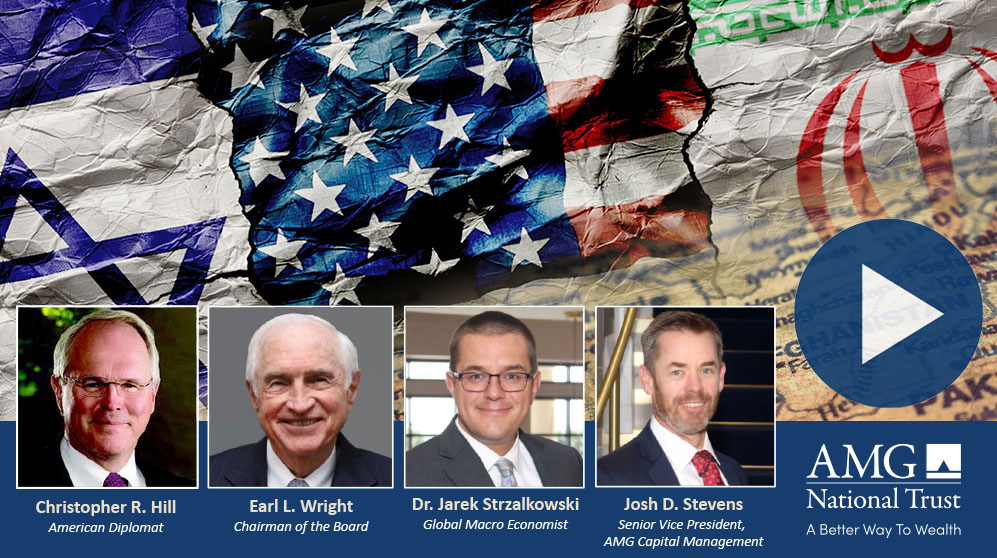
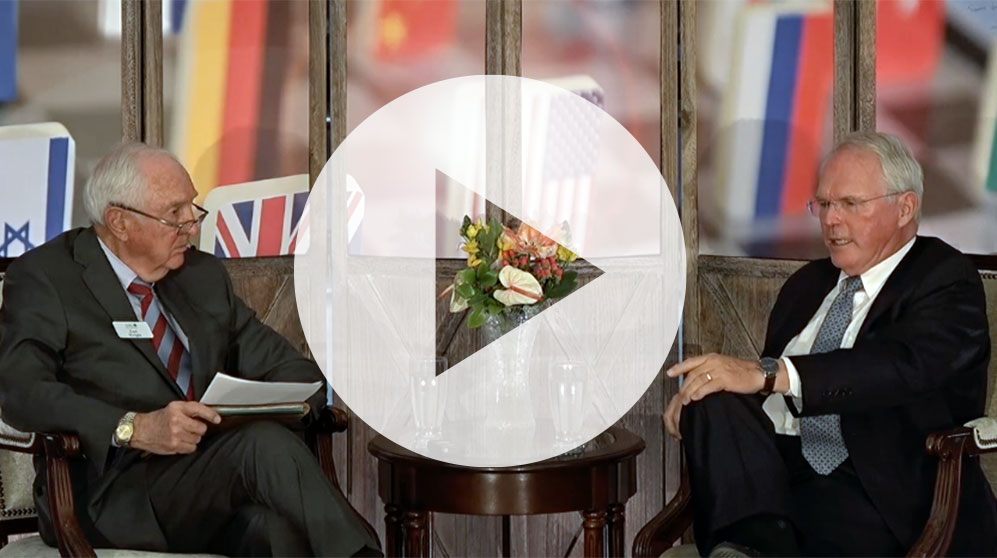
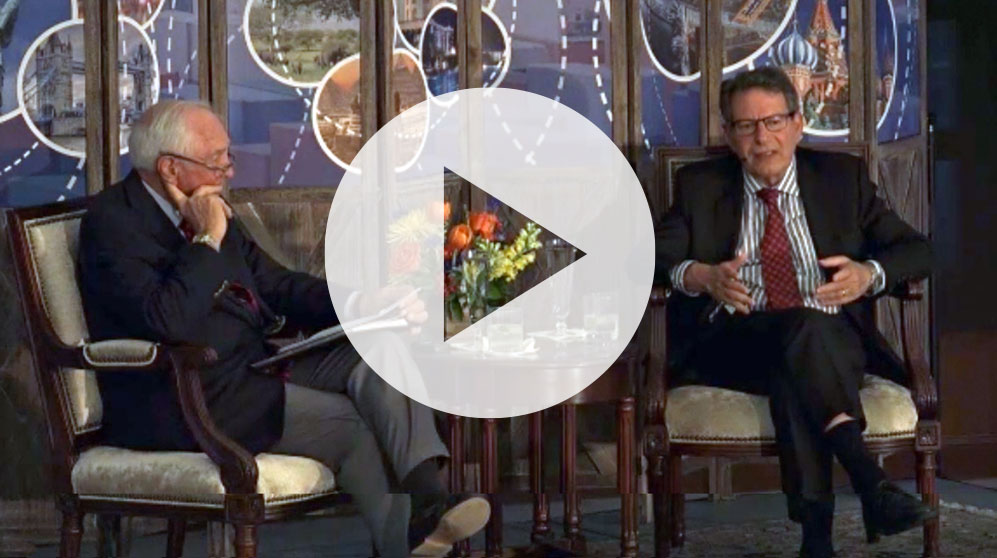
To learn how this new paradigm has evolved and whether it might be sustained by subsequent administrations, AMG National Trust hosted a podcast with Ambassador Christopher Hill on July 15 titled “Changing the Rules of International Engagement and Redefining Diplomacy.” The discussion was moderated by AMG Chairman Earl Wright.
Ambassador Hill speaks from a long and storied diplomatic career, having served in many key posts, including Poland, Iraq, and South Korea. His full bio is available here.
Some of what the Trump administration is doing in response to geopolitical threats is necessary and “definitely sustainable,” Ambassador Hill said. U.S. military activity in Asia is an example, where we routinely conduct military exercises to make clear to others flexing their muscles, like China, that we are not pulling back from our responsibilities.
“I would hope future administrations would (also) do that” and maintain strong ties to like-minded or cooperative nations, he added.
What is not sustainable, the ambassador noted, is the more transactional nature of international affairs we are seeing currently. The administration is making little distinction between countries with which we have fundamental disagreements versus countries with which we are fundamentally aligned and instead is approaching each issue on a transactional basis that could sidestep long-term interests.
Perhaps nowhere has this power paradigm been more evident than in the recent United States and Israeli attacks on Iran’s nuclear facilities. In raising this point, Mr. Wright asked whether this might be the first step in something bigger that’s going on in the Middle East.
Ambassador Hill pointed out that Israel has nurtured an active diplomacy with a number of Arab countries, culminating during the first Trump administration with the Abraham Accords (aimed at normalizing relations between Israel and several Arab nations, beginning with the United Arab Emirates, Bahrain, Morocco, and Sudan).
“There’s a dawning realization in the Arab world that Israel … it’s not going away. And they need to find a way forward to work with Israel.”
The ongoing tragedy in Gaza may have set relations back.
Taking on Iran, on the other hand, with its strength in the region weakened, could be seen by other Middle East countries as more palatable.
“I think we (the United States) saw an opportunity to set Iran back in terms of the most dangerous element, far more dangerous than Israel, Arabs or Sunni-Shia (splits), which is Iran’s capacity to have a have nuclear weapons,” Ambassador Hill said. “Because if that were to happen, you would have Saudi Arabia wanting nuclear weapons. They might team up with Pakistan, which already has nuclear weapons, a lot of real existential concerns about where we’d go with nuclear weapons.”
“So, we stepped into it. The question is, where are we going to go with this? … Only the U.S. really has the relationships with all the partners in the region to try to deal with the complexities and the unknowns that are before us.”
“Some years ago, there was this idea that the U.S. would pivot away from Middle East and toward the Pacific. Because after all, China is a serious concern to our national security, whereas some of these small countries in the Middle East are not. I think nonetheless, it speaks to the fact that we’ve got to be very active in both places. While Europe, I think, can do more and more to handle their own issues.”
While the prowess of the U.S. military is unequaled, Ambassador Hill said, we no longer have the financial wherewithal to cover the world unilaterally, meaning we will need to rely on allies to step up.
NATO is one such example, having come together post-World War II to sustain the peace when Europe was a likely flashpoint and the United States provided the lion’s share of defense.
Today, though, “If there’s any area of the world that should be able to handle a lot of its security concerns, it’s in Europe, where you have very powerful countries that have underinvested in their military but now have the message that they’ve got to ramp up their expenditures.”
This includes supporting Ukraine against Russia. Citing President Putin’s stubbornness, President Trump has come to the decision in recent days that for the conflict to be resolved, Ukraine needs to have the wherewithal to continue to defend itself, such as being supplied with expensive U.S.-built Patriot anti-missile batteries. NATO, though, will need to bear more of the financial burden for its own backyard, including buying weapons from the United States and transferring them to Ukraine.
Outcomes like this can strengthen NATO and other U.S. alliances by amplifying the understanding that when the chips are down, “We’ll all pull together, because a lot of what we need in the world are friends and allies.”
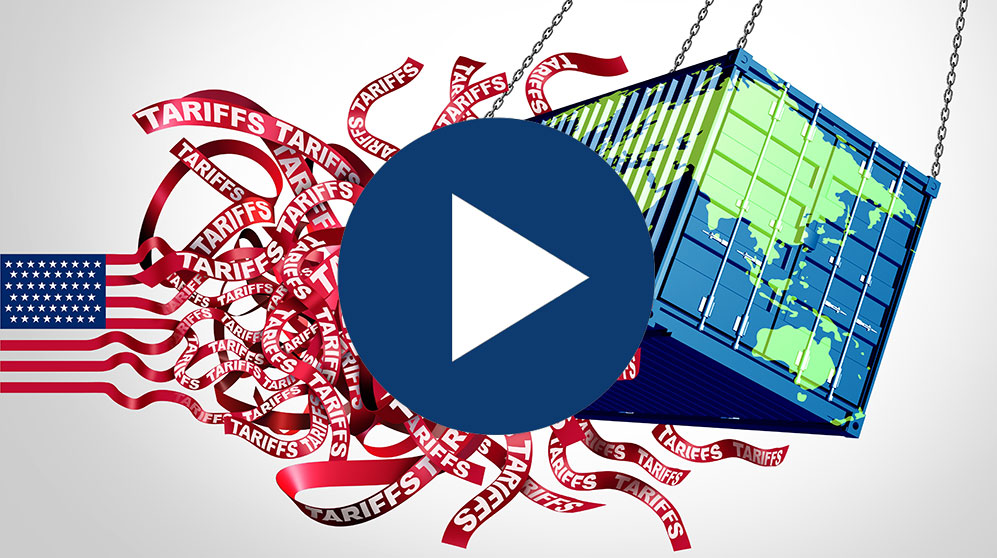
On the flip side, picking fights “over some economic issue, let’s say tariffs … you kind of fray the fabric of the relationship.”
Mr. Wright moved the conversation to China, which is posing challenges—economically and militarily—around the globe and is forcing Washington to rethink how to stay engaged and where to push back.
For instance, China is very protective of the Strait of Malacca, through which about 80% of its imported crude oil passes. Washington, meanwhile, has challenged Beijing’s efforts to assert unilateral dominion over the strait and other waterways. Mr. Wright posed the question: How does the United States recognize China’s concerns while also protecting our interests?
Ambassador Hill said China has “some legitimate concerns about their access to raw materials. But they also … have often treated some of their Asian neighbors not as sovereign nations, but rather as tributary states, a relationship that China had with most of its neighbors for most of its history.”
“I would argue it’s hard to work with China, but if you think that’s hard, try working against China,” Ambassador Hill said.
Still, “I have some real concerns about people who say we need to decouple from China. First of all, they have a lot of capacity to invest in other parts of the world. They’re doing it. And I’m not sure decoupling is the way to gain our leverage. … We’ll be losing leverage if China is less of a factor in our own economy.”
“And so … we need to find a modus operandi, a modus vivendi, really a way to live with these people. … We don’t want a situation where China begins to challenge us everywhere and in things that include our vital interests,” the ambassador said.
Mr. Wright pointed out the paradigm in global manufacturing and trade. Before the pandemic, China may have seemed to be an opportunity where foreign companies could produce goods at a competitive advantage. Then the pandemic began to close the spigot of goods manufactured overseas that are necessary to the U.S. economy, reminding everyone of the need to produce at least some goods at home to support economic independence.
Tariffs—and the threat of bringing jobs back to the U.S.—thus have become a bigger bargaining tool.
Ambassador Hill responded that the United States is not the only country that has resorted to invoking politics or national security grounds to defend trade. The issue is to keep security concerns and tariffs at some manageable level so that others “don’t invoke politics, labor rights or whatever it is on every single issue that comes up.”
At AMG, we closely follow geopolitics and the potential economic impact. This can assist with our comprehensive planning around each client’s unique circumstances, helping clients to make prompt and informed decisions to benefit their financial well-being.
Not a client? Find out more about AMG’s Personal Financial Management (PFM) or to book a free consultation call 303-486-1475 or email us the best day and time to reach you.
This information is for general information use only. It is not tailored to any specific situation, is not intended to be investment, tax, financial, legal, or other advice and should not be relied on as such. AMG’s opinions are subject to change without notice, and this report may not be updated to reflect changes in opinion. Forecasts, estimates, and certain other information contained herein are based on proprietary research and should not be considered investment advice or a recommendation to buy, sell or hold any particular security, strategy, or investment product.