

Anxious About the Economy? Be a Disciplined Investor
• 3 min read

In times like these, investors are anxious about the economy and the future in general; here’s what you should do.
Get the Latest Research & Insights
Sign up to receive an email summary of new articles posted to AMG Research & Insights.
Each year, AMG surveys clients to gauge satisfaction and identify future needs. Recent feedback confirms that we continue to meet or exceed expectations in delivering services. However, the surveys also reveal a notable rise in anxiety surrounding national, international, and economic developments—levels not seen since the 2020 pandemic or the 2007–2008 financial crisis.
Despite this heightened unease, economic fundamentals remain solid. The U.S. economy grew an estimated 2.3% in 2025 and is projected to expand by more than 2% in 2026, supported by record highs in U.S. equity markets.
This resilience underscores a critical point: While sentiment is fragile, underlying growth persists.
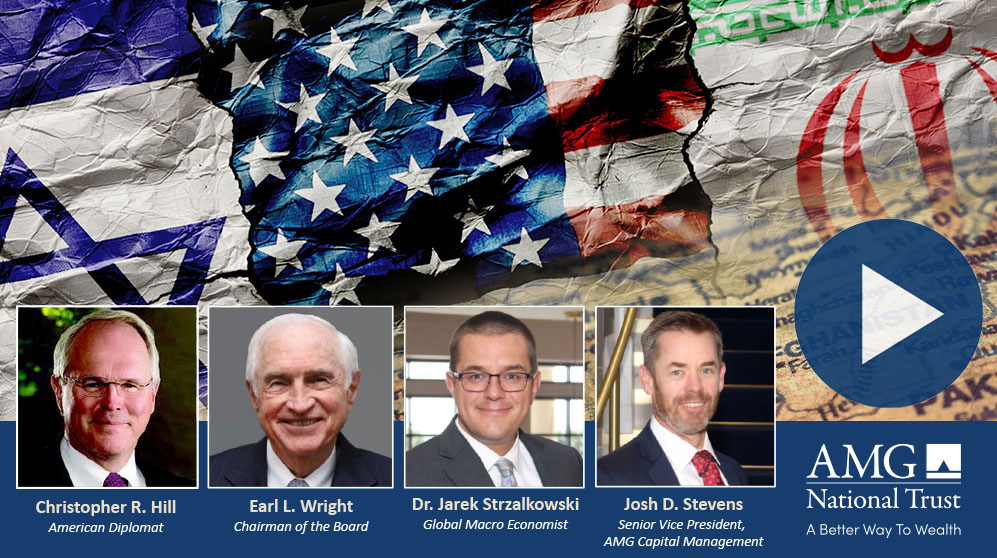
A major source of investor uncertainty stems from the pace and style of change introduced by the new Trump administration. Psychologists note that rapid, unconventional shifts often amplify feelings of instability. The question for investors is: Are these changes eroding America’s economic foundation—or reshaping it for the future? Here are some issues impacting investor unease.
- Immigration: The administration has delivered on its pledge to close borders, sharply reducing undocumented immigration. Efforts to remove individuals with felony convictions have sparked social tension and scrutiny over enforcement methods. Longer term, the challenge remains crafting an immigration framework that supports sustainable economic growth.
- Tariffs: These evoke historical parallels to the Smoot-Hawley Act of the Great Depression—widely regarded as a failure. Critics of current tariffs warned of inflation and supply disruptions, yet outcomes have been less severe than anticipated. The administration’s strategy—leveraging tariff revenue and foreign capital to fund infrastructure—now faces its ultimate test: Can protectionist measures coexist with growth?
- Geopolitical events: Trade disputes, NATO in-fighting, and assertive stances on Iran, Gaza, Venezuela and drug traffickers have added complexity. These moves have unfolded within a single year—raising the question of whether they will foster lasting stability or create unknown risks?
Given all that, client unease is understandable. Rapid change across multiple fronts breeds uncertainty. Yet economic indicators suggest continued expansion. For investors, this environment calls for disciplined portfolio positioning: diversification to mitigate geopolitical and policy risk, a focus on fundamentals as U.S. growth remains intact and opportunistic strategies in sectors benefiting from infrastructure investment and trade realignment.
In short, while headlines may amplify anxiety, the data points to resilience. The challenge—and opportunity—lies in navigating volatility without losing sight of long-term growth trends.
HOW AMG CAN HELP
Not a client? Find out more about AMG’s Personal Financial Management (PFM) or to book a free consultation call 303-486-1475 or email us the best day and time to reach you.
This information is for general information use only. It is not tailored to any specific situation, is not intended to be investment, tax, financial, legal, or other advice and should not be relied on as such. AMG’s opinions are subject to change without notice, and this report may not be updated to reflect changes in opinion. Forecasts, estimates, and certain other information contained herein are based on proprietary research and should not be considered investment advice or a recommendation to buy, sell or hold any particular security, strategy, or investment product.
Get the latest in Research & Insights
Sign up to receive a weekly email summary of new articles posted to AMG Research & Insights.