




Generational Differences: What Causes Them & Why Do They Matter?
• 8 min read
- Brief: Life Events
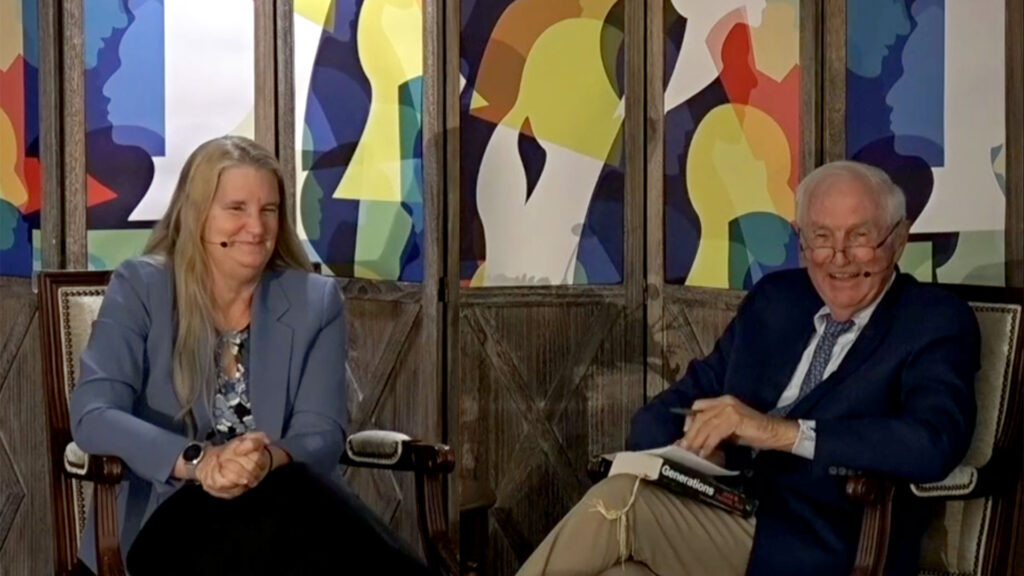
Dr. Jean Twenge unpacks real differences between generations and the forces driving them.
Get the Latest Research & Insights
Sign up to receive an email summary of new articles posted to AMG Research & Insights.
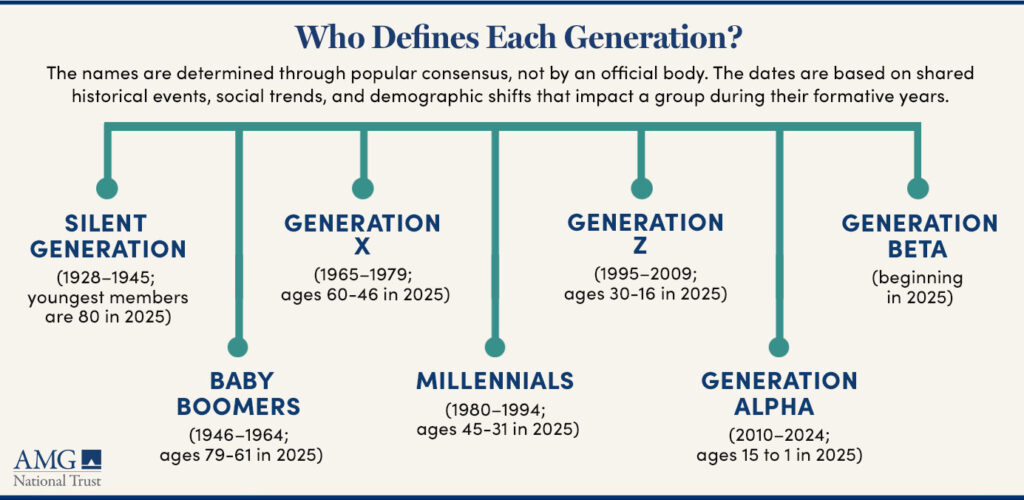
Something about each generation is a little different than the ones before or after. From Gen Alpha to the Silent Generation, each brings distinct values and expectations that are transforming our economy, workplaces, and families.
To talk about transformations and connections across generations and to understand how these can benefit us from the family room to the boardroom, AMG National Trust presented “Generational Differences: What Causes Them & Why Do They Matter?” The Nov. 20 event featured Dr. Jean Twenge, a professor of psychology at San Diego State University and the author of more than 190 scientific publications and 17 books, including “Generations: The Real Differences Between Gen Z, Millennials, Gen X, Boomers, and Silents—And What They Mean for America’s Future.” Her frequent talks and seminars on generational differences, social media, and mental health are based on a data set of 43 million young people. AMG Chairman Earl Wright served as moderator for the Q&A segment.
Growing Up Faster Or Slower?
What’s the source of generational differences? Dr. Twenge said the classic theory is that they are the outcome of historical events—for example, wars, pandemics, economic events, etc. However, she said, “technology is at the root of so many of these differences.”
Technology, for example, has led to better medical care that has extended the average life span to nearly 80; faster transportation that can get you almost anywhere in hours instead of days or weeks; and advances in communication that have gone from the rotary phone to smartphones that connect us to the internet 24/7.
One of the starkest differences in generations is how reaching traditional markers of “adulthood” has slowed over time, despite the fact that life’s pace seems to be “faster.”
- Fast Life Strategy: Until a few decades ago, families were larger. Children had more independence and freedom to play, roam, and learn on their own; as a result, they tended to grow up more quickly.
- Slow Life Strategy: Parents tend to make the choice to have fewer children and nurture them more carefully, primarily during times when people live longer, when healthcare is better and when education takes longer to finish.
Neither strategy is all bad or all good, Dr. Twenge said. And there may be some truth to the argument that kids are growing up even faster today due to access to so much information online.
“Adulting” Delayed
A more empirical way, perhaps, of measuring the pace of adulthood is by comparing responses by high school seniors today to the same questions answered by previous generations at the same age.
The results: Young adults don’t seem all that eager to be, well, adults.
Data from 2024 and going back to 1980 reflect all-time lows for their eagerness to leave home and live independently, or to have a job and enter the adult world. They’re also less likely to have a driver’s license, to have tried more than a few sips of alcohol, to date, or have a paid job.
Decisions such as these to delay “adulting” are “part of the slow life strategy,” Dr. Twenge said. The implications are that more people are getting four-year college degrees, but marriage, children, and careers are being pushed later as individuals seek more freedom and take longer to grow up.
“It’s not that they’re more responsible or less responsible,” she added. “It’s that they’re taking longer to do adult things across the board … . The downside is they’re getting to legal adulthood without as much experience with independence and decision-making.”
The Future of Work
Those individuals just coming out of high school or college and entering the workforce today come from Gen Z. Dr. Twenge sought to highlight attitudes today by turning again to questions from the high school senior surveys.
Do you believe work is just making a living? That belief has become much more common. The biggest difference between Gen Z and previous generations is their desire for a better work-life balance, meaning they are looking for flexibility to work from home, with time for mental wellness and “having a life.”
They also seem anxious to move ahead. “People don’t often stay at the same company for their whole career anymore. So that idea of waiting two years for a promotion feels like forever,” Dr. Twenge said. In response, some organizations have begun to offer smaller promotions more frequently—such as every six months—to retain younger workers.
Do you want a job with a lot of vacation time? This desire increased steadily among baby boomers and Generation X and peaked among millennials but has since declined slightly.
Are you willing to work overtime? While that willingness has been declining, it came back a little bit with Gen Z, although it remains below levels from baby boomers and Generation X.
Do you want a job that’s interesting and where you can make friends? “Those two (questions) in particular (are) completely contrary to what you might have read … ‘Oh they want meaning, they want purpose. They want to make friends,’ ” she said. In reality, these are less important to millennials and Gen Z.
Do you want a job where you can help others? “This is one of their real strengths, is their interest in helping others.”
Rise of Smartphones and Mental Health Issues
Around 2012, a mental health crisis began to emerge among adolescents, Dr. Twenge said. “More and more teens started to say that they felt left out, started to say that they felt lonely, more started to say they felt like they couldn’t do anything right, that they didn’t enjoy life, that their life wasn’t useful. And those are classic symptoms of depression.”
What circumstances might explain this? “That was the first year the majority of Americans owned a smartphone (which were introduced just five years earlier).”
Dr. Twenge pointed out that it’s not just the smartphone; it’s what people do on a smartphone. Like social media, where use exploded so that almost all high school seniors across demographic groups were using it.
If they’re spending that much time online, what are they not doing?
They’re socializing less face to face, hanging out less and going to fewer parties.
They’re also getting less sleep, she said, often less than seven hours a night when nine would be optimal.
A further concern is that high school seniors say they are having difficulties with cognitive things like thinking, remembering, and learning, “Which makes me think that technology impact isn’t just in mental health,” Dr. Twenge added. “It’s around being able to concentrate, being able to pay attention, being able to think deeply is really hard when you’ve grown up on TikTok.”
Is There a Better Balance?
We can learn to use technology for what it’s good for, then put it away.
Our devices wind us up, Dr. Twenge said, and the blue screen light can trick our brains into thinking it’s still daytime and inhibit production of the sleep hormone melatonin. Shutting devices down an hour before bedtime and instead picking up a book, chatting, or taking a warm bath can help us relax and fall asleep more easily.
Dr. Twenge had some other suggestions for a better life balance:
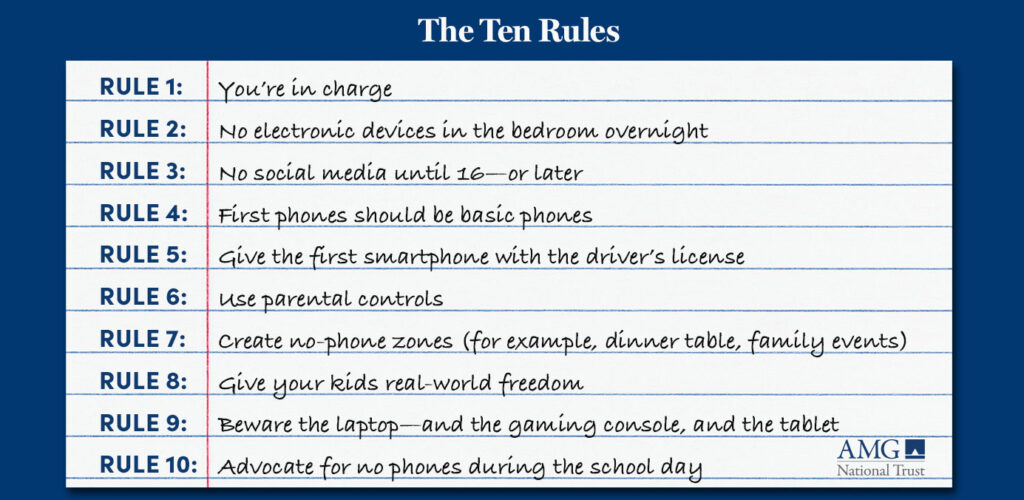
- No phones or other devices in the bedroom overnight. “(There is) tons of research on this, that people sleep better and longer when their devices are physically outside of the bedroom. … (Otherwise) your brain knows it’s there.”
- Buy an alarm clock instead of using your phone as one.
- If you want to watch TV or use a tablet before bed, wear a pair of orange safety glasses because “they do filter out the blue light pretty effectively.”
Ten Rules for Raising Kids in a High-Tech World
The information in her research sometimes collides with her life as a parent of three teenagers, Dr. Twenge said, resulting in lessons she included in her book, “10 Rules for Rasing Kids in a High-Tech World.”
For instance, she pondered her parents’ reaction if she had asked for “something that costs about a thousand dollars and it’s going to be $40 a month into perpetuity. And people around the world, even adults I don’t know, are going to be able to contact me.”
“What would they have said? They would’ve said no.”
Dr. Twenge offered the following tips to parents:
A final reflection from Dr. Twenge was that technologies and devices can help ease our labors and improve lives: We can look up nutrition information on our phone, count our steps, and use a maps app to find our way, among other things.
How are we going to use that time we have been given back, she asked.
“Are we going to use that to scroll through Instagram, to look up stuff online, to fight with strangers on the internet? Or are we going to use it to help each other and to talk to each other and to build those relationships?”
“We need to find a way for technology to light our way instead of darken it.”
Mr. Wright also shared a parting thought about Generation Z, saying they are an incredibly talented group. “(They) might be the brightest group of people we’ve ever had in the United States as far as just pure intellectual capabilities and quality.”
They also may be a little insular or uncertain about how to proceed but it’s the task of parents and grandparents, business leaders and educators to help them, he added.
He also emphasized a comment by Dr. Twenge about the value of communication. “Well, let’s go out and communicate, shall we?”
Request access to the webinar recording
This information is for general information use only. It is not tailored to any specific situation, is not intended to be investment, tax, financial, legal, or other advice and should not be relied on as such. AMG’s opinions are subject to change without notice, and this report may not be updated to reflect changes in opinion. Forecasts, estimates, and certain other information contained herein are based on proprietary research and should not be considered investment advice or a recommendation to buy, sell or hold any particular security, strategy, or investment product.



Get the latest in Research & Insights
Sign up to receive a weekly email summary of new articles posted to AMG Research & Insights.